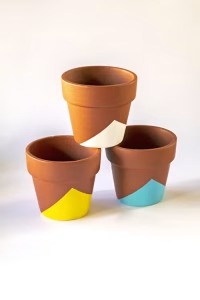
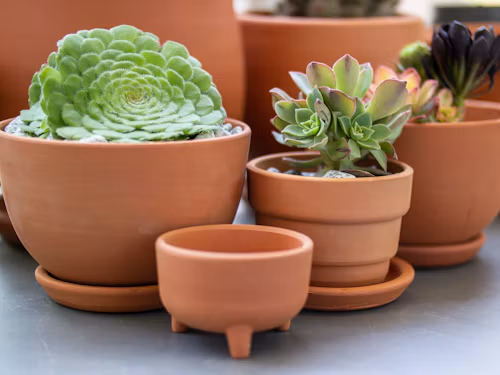
Painting a terracotta pot for outdoor use requires more than choosing a color you like. Sun, rain, temperature changes, and moisture can affect both the terracotta and the painted surface, so the right acrylic paint should be selected with the pot’s location and intended use in mind. This guide explains what to look for in acrylic paint for outdoor terracotta pots and how to make a practical choice without relying on a single “best” product.
Key Takeaways
Choosing outdoor acrylic paint involves more than selecting a suitable color. The paint should match the terracotta surface and the conditions the pot will face. The following sections explain what to consider before making your choice.
- Choose acrylic paint according to the pot’s expected outdoor exposure, not just its color or finish.
- Look for paint whose manufacturer states that it is suitable for the intended outdoor application and surface.
- Terracotta is porous, so surface preparation can affect how evenly paint applies and adheres.
- Outdoor exposure makes the choice of protective finish important, but paint and sealer should be treated as separate products with separate instructions.
- A sheltered outdoor pot has different requirements from one exposed to frequent rain and strong sunlight.
- If the pot will hold a plant, consider moisture exposure from both the outside environment and the potting medium.
What To Look For In Acrylic Paint For Outdoor Terracotta Pots?
There is no single acrylic paint that is automatically the best choice for every outdoor terracotta pot. The conditions surrounding the pot matter. A container sitting beneath a covered porch has less exposure than one left in direct sun and rain.
When comparing paints, consider these factors:
Outdoor suitability
Start with the manufacturer’s intended use. A paint described specifically for exterior or outdoor applications is a more appropriate starting point than one intended only for indoor decorative work.
Check the product label or technical information for the surfaces it is designed to cover. If terracotta, clay, masonry, or a comparable porous surface is included, that provides more useful information than a general claim that the paint is simply “acrylic.”
Do not assume that all acrylic paints have the same outdoor performance. Formulations differ, and manufacturers may place different limitations on where their products can be used.
Adhesion to porous terracotta
Terracotta absorbs moisture and can have a dusty, uneven surface. Paint therefore needs a clean, suitably prepared surface rather than simply being brushed over dirt or loose residue.
Resistance to the conditions the pot will face
Outdoor exposure is not one fixed condition. Think about where the pot will actually sit.
A pot may experience:
- Direct sunlight for several hours a day
- Frequent or occasional rain
- High humidity
- Repeated wetting and drying
- Temperature changes
- Splashing from watering
- Moisture from the soil inside the pot
If the manufacturer’s information provides relevant exterior-use or weather-resistance guidance, use that information when comparing products. Avoid choosing a paint solely because another painter describes it as “weatherproof” or “waterproof.”
Finish
The finish is mainly an appearance decision, although it can also affect how the finished surface looks as it ages.
Acrylic paints are available in different finishes, including matte, satin, and gloss. Choose according to the appearance you want rather than assuming one finish is inherently better for outdoor terracotta.
If you want a particular finish but cannot find the paint in that formulation, a compatible protective coating may provide another option. However, confirm compatibility and application requirements from the coating manufacturer.
Once you understand the main paint characteristics, the next step is to consider how the pot’s location affects your choice.
Match The Paint To The Pot’s Outdoor Location
The same acrylic paint may be suitable for different pots, but the protection required from the finished surface can vary considerably.
Sheltered outdoor pots
A pot placed under a covered porch, balcony, or other sheltered area may receive less direct rain and sunlight than a fully exposed pot.
In this situation, an acrylic paint intended for exterior use may be sufficient when applied to a properly prepared surface, provided the manufacturer’s instructions allow the intended application.
The reduced exposure does not mean moisture can be ignored. Terracotta can still encounter humidity, watering, condensation, and moisture from the plant.
Fully exposed pots
A pot positioned in an uncovered garden or other exposed location faces more demanding conditions. Rain and direct sunlight repeatedly act on the painted surface, while the porous terracotta can interact with moisture underneath it.
For an exposed pot, pay closer attention to the manufacturer’s exterior-use claims and any limitations concerning weather, surfaces, or required preparation.
A protective coating may also be worth considering, but it should not be treated as a universal solution. Its suitability depends on the product, the paint beneath it, the exposure, and how the pot will be used.
Exposure to sunlight and rain helps determine the paint requirements. It also makes the distinction between regular craft acrylic and outdoor acrylic worth examining.
Check out how to choose acrylic paint for terracotta pots?
Should You Choose Craft Acrylic Or Outdoor Acrylic?
The distinction matters, but the label alone should not make the decision.
Some craft acrylics are intended primarily for decorative indoor projects, while other acrylic formulations are designed for exterior applications. If an outdoor pot will be exposed to substantial weather, an acrylic specifically documented by its manufacturer for exterior use is the more defensible choice.
That does not mean every product marketed as “outdoor acrylic” will perform equally well on terracotta. Read the actual product instructions and surface recommendations.
If you are unsure about a particular product, test it on an inconspicuous area of terracotta before committing to the entire pot.
After selecting an appropriate paint type, consider whether the terracotta needs a primer to support the application.
Do You Need To Prime Terracotta Before Painting?
Primer can be useful, but it should not automatically be treated as mandatory for every acrylic paint.
Some paints are designed to be applied directly to suitably prepared surfaces. Others may benefit from or require a primer for particular applications. The correct choice depends on the paint and primer manufacturer’s instructions.
If you decide to prime, use a primer compatible with both the terracotta and the acrylic paint. The primer should be allowed to dry according to its own instructions before painting.
Primer can help prepare certain surfaces, but the finished paintwork may also need additional protection depending on outdoor exposure. This brings us to the role of sealing.
What About Sealing Acrylic Paint On Outdoor Terracotta Pots?
Sealing and painting are two separate decisions.
A suitable exterior coating can add another layer of protection, but not every sealer is compatible with every acrylic paint or intended for every outdoor condition. The finished system should therefore be considered as a combination of terracotta + preparation + paint + protective coating, rather than assuming any sealer will work over any acrylic.
Check the sealer manufacturer’s instructions for:
- Compatible surfaces
- Compatible paints or coatings
- Interior or exterior use
- Moisture exposure
- Application conditions
- Recommended maintenance or limitations
If the pot will remain outdoors year-round, those instructions become particularly relevant.
The protective coating is only one consideration. If the pot will contain a plant, moisture exposure from the soil and watering also deserves attention.
Check out our guide on materials and tools for the best acrylic painting on terracotta experience.
How To Choose Paint When The Pot Will Contain A Plant?
A planted pot has an additional source of moisture that an empty decorative pot does not.
Water can contact the painted exterior through normal watering, while moisture inside the pot interacts with the porous terracotta. The drainage area may also remain exposed to repeated wetting.
For this reason, do not choose paint solely because it has a desirable outdoor finish. Consider the entire use case and follow the manufacturer’s instructions for the paint and any protective coating.
If a product has specific restrictions concerning contact with water, soil, food, plants, or other materials, follow those restrictions rather than assuming that “outdoor” means suitable for every gardening application.
Once you understand the conditions affecting a planted pot, you can use a straightforward comparison process to evaluate different acrylic paints.
A Simple Way To Compare Acrylic Paints
When you have several possible paints, compare them in this order:
- Check the intended use. Confirm that the manufacturer allows outdoor application.
- Check surface compatibility. Look for terracotta, clay, masonry, or another explicitly supported surface.
- Consider exposure. Decide whether the pot will be sheltered or fully exposed to sun and rain.
- Check the application instructions. Preparation, drying, and additional coatings should follow the product guidance.
- Choose the appearance. Select the color and finish that suit the design after the practical requirements have been satisfied.
- Evaluate the protective coating separately. If you plan to seal the pot, verify compatibility rather than assuming any clear coat will work.
This approach is more reliable than searching for a paint simply described as the “best” acrylic for outdoor terracotta pots.
Even after comparing products, certain selection mistakes can lead to unsuitable choices. Knowing what to avoid helps you make a more informed decision.
Common Mistakes When Choosing Outdoor Acrylic Paint
Choosing acrylic paint for outdoor terracotta pots involves more than checking the product label or selecting a suitable finish. Some common assumptions about acrylic paint, weather resistance, and protective coatings can lead to poor product choices. Understanding these mistakes helps you evaluate paint more carefully and avoid problems with outdoor applications.
Choosing by color alone
A color chart tells you how the paint looks, not whether the formulation is appropriate for prolonged outdoor exposure.
Better approach: Check the manufacturer’s intended use and surface recommendations first, then choose the color.
Assuming every acrylic is weather-resistant
“Acrylic” describes a broad family of water-based polymer paints and coatings. Products can have very different formulations and intended uses.
Better approach: Look for specific manufacturer information about exterior use instead of general assumptions about acrylic paint.
Treating “water-resistant” as “waterproof”
These terms should not be used interchangeably. A product’s resistance to moisture does not automatically mean it can withstand continuous or repeated outdoor exposure without limitations.
Better approach: Follow the manufacturer’s stated performance and use conditions.
Ignoring the terracotta itself
Paint performance is affected by the condition of the surface beneath it. Dust, residue, loose material, or excess moisture can interfere with a consistent application.
Better approach: Prepare the terracotta before painting and make sure it is ready for the chosen product.
Assuming a sealer fixes an unsuitable paint
A clear coating cannot automatically turn an indoor decorative paint into a suitable exterior coating.
Better approach: Start with paint appropriate for the intended environment, then select a compatible protective coating if one is needed.
Keeping these considerations in mind makes it easier to choose paint that suits your terracotta pot and its intended outdoor environment. The following FAQs address some common questions before the final summary.
FAQs About Choosing Acrylic Paint for Outdoor Terracotta Pots
These answers address common questions about selecting acrylic paint, outdoor exposure, and protecting painted terracotta pots.
What is the best acrylic paint for outdoor terracotta pots?
The best choice depends on the pot’s exposure and the manufacturer’s stated uses. For outdoor terracotta, prioritize an acrylic product documented for exterior applications and compatible with porous surfaces. Then consider sunlight, rain, moisture, finish, preparation requirements, and whether a protective coating is recommended.
Can I use regular acrylic paint on an outdoor terracotta pot?
Yes. Regular acrylic paint can be suitable when the specific product is intended for the planned outdoor application. Check its label or technical information rather than assuming all acrylic paints perform alike. For exposed pots, exterior-use guidance and compatibility with terracotta deserve particular attention.
Should I seal acrylic paint on an outdoor terracotta pot?
Yes. A compatible exterior sealer can provide additional protection, but it is not automatically required for every acrylic paint or situation. Check both products’ instructions before applying one over the other, especially when the pot will experience rain, sunlight, watering, or repeated moisture.
Does outdoor acrylic paint work on terracotta?
Yes. Outdoor acrylic paint can work on terracotta when the product is suitable for the surface and applied according to its instructions. Terracotta should be clean and adequately prepared before painting. Outdoor exposure still varies, so choose a formulation and protective system appropriate for the pot’s location.
Can painted terracotta pots stay outside in the rain?
Yes. A painted terracotta pot can be kept outside in rainy conditions when the paint and any protective coating are intended for that exposure. Rain alone does not establish durability, however. Follow the manufacturer’s exterior-use guidance and consider how moisture affects both the coating and porous terracotta.
With the main selection factors and common questions covered, here is a brief recap of what to consider when choosing outdoor acrylic paint.
Summary
Choosing acrylic paint for outdoor terracotta pots comes down to matching the paint, surface preparation, and protective coating to the pot’s intended environment.
- Choose acrylic paint for outdoor terracotta pots based on the actual conditions the pot will experience.
- Prioritize manufacturer information about exterior use and surface compatibility.
- Prepare the porous terracotta before painting.
- Consider direct sun, rain, watering, humidity, and repeated wetting and drying.
- Treat primer and sealer as product-specific decisions rather than automatic requirements.
- For planted pots, consider moisture from both the outdoor environment and the pot’s interior.
- A paint described as acrylic is not automatically suitable for prolonged outdoor exposure.